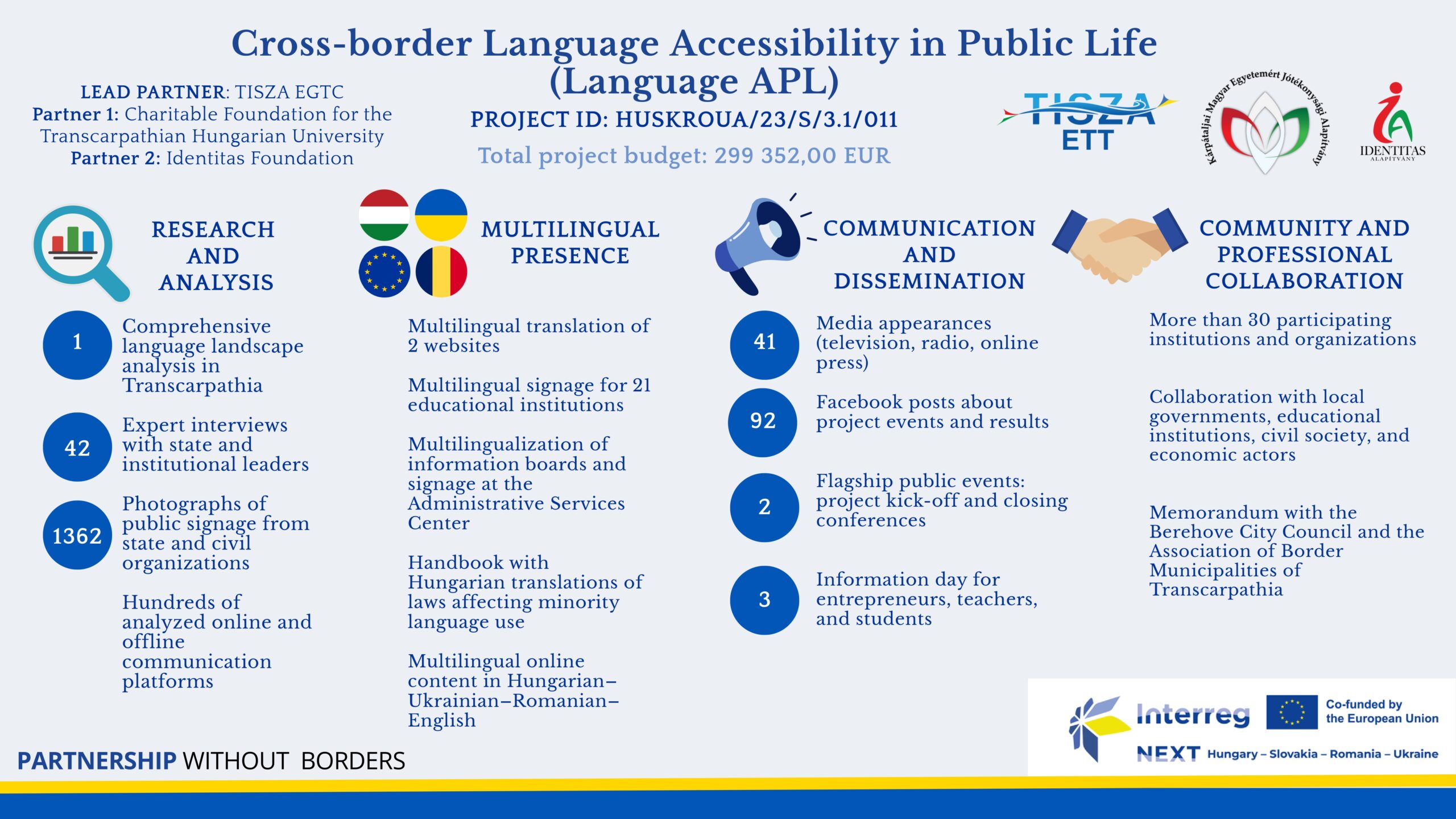
Language APL is a cross-border initiative designed to promote multilingualism and support inclusive public communication across the Hungarian–Ukrainian–Romanian border region. The project responds to both long-standing minority language issues and recent demographic changes, particularly the influx of Ukrainian citizens to EU neighbouring countries due to the ongoing war. In this context, multilingual communication is essential not only for cultural inclusion but also for improving public services and encouraging cross-border economic cooperation.
The project addresses two core objectives: protecting and promoting minority language use in line with European values, and facilitating economic cooperation by improving language accessibility in both official and private spheres.
To achieve this, the project will identify five best-practice multilingual locations—online or physical—in each partner country that demonstrate inclusive, multilingual communication. It will inform minority communities about their rights through brochures and legal assistance and help selected businesses or institutions translate signage and informational materials into multiple languages.
A closing conference in Berehove, at the Ferenc Rákóczi II Transcarpathian Hungarian College of Higher Education, will present the project’s findings, showcasing examples of successful multilingualism and featuring input from international experts.
The Antal Hodinka Linguistic Research Center, with a long-standing record in researching bilingualism in Transcarpathia, plays a key role in the project. Their past studies have revealed a strong demand among the Hungarian minority for official language use, and growing interest in multilingualism in the private sector—trends that this project aims to support and expand.
Language APL ultimately contributes to a more inclusive, cooperative, and economically connected border region through the strategic promotion of linguistic diversity.