Livestock farming is an important part of life in many rural communities across the Carpathians. However, where grazing areas overlap with large carnivore habitats, shepherds face the risk of attacks on their animals, which can lead to economic losses and tensions between people and wildlife.
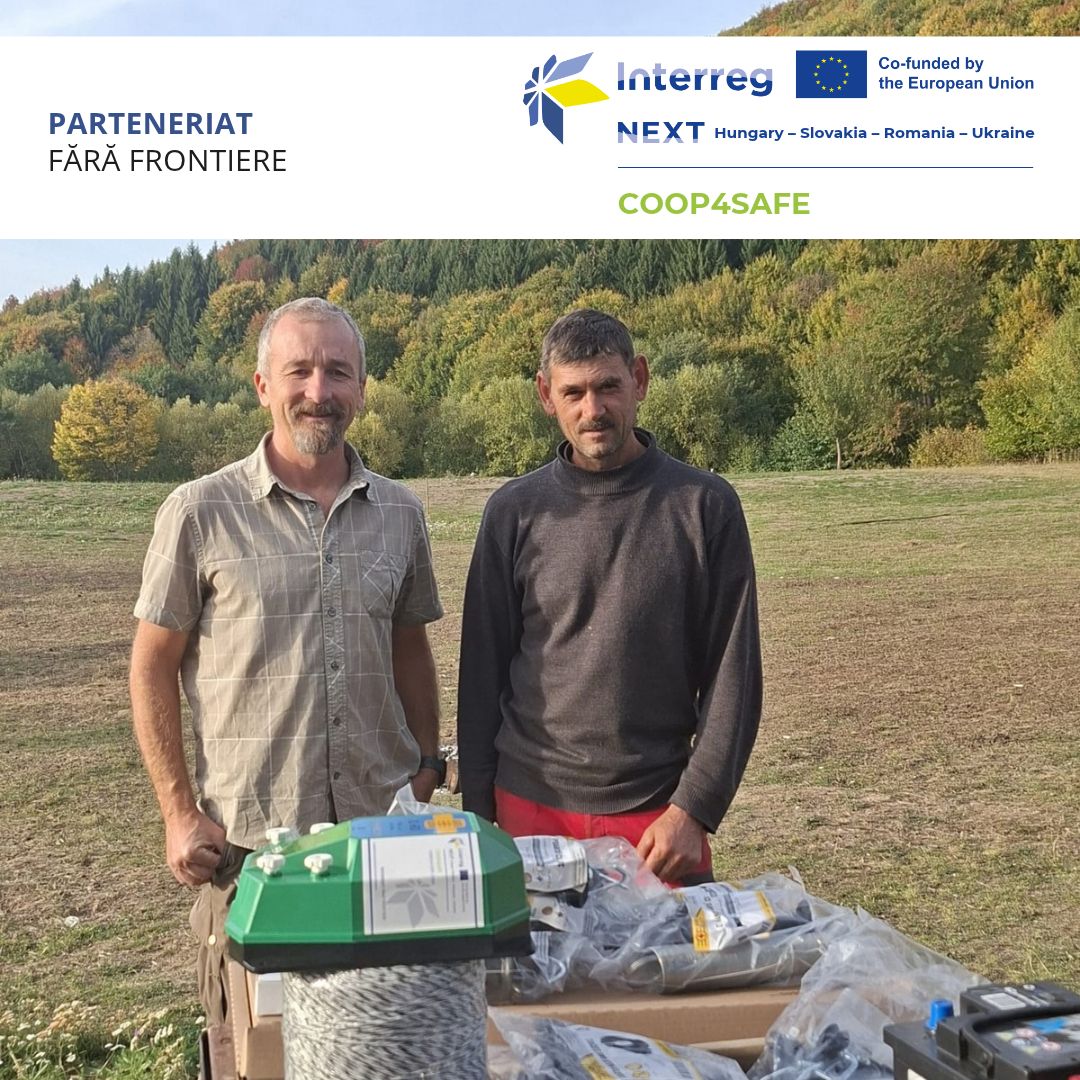
In Negreia, Maramureș County, Romania, a local shepherd has received an electric fence through the COOP4SAFE project to help protect his livestock. This practical measure aims to reduce the risk of attacks by large carnivores, particularly bears and wolves.
Electric fences create a protective barrier that discourages predators from approaching livestock. When properly installed and maintained, they can significantly reduce the risk of attacks, helping farmers safeguard their animals and livelihoods.
Providing preventive equipment to local communities is an important step towards making coexistence work in practice. Rather than addressing conflicts only after they occur, such measures help prevent them, benefiting both people and wildlife.
At the same time, supporting livestock owners contributes to the resilience of rural economies. By reducing losses and increasing the security of farming activities, preventive measures help local families continue their traditional businesses, sustain local production, and contribute to the economic vitality of the community. Maintaining viable livestock farming also supports related local services and value chains, creating broader benefits for the area.
The initiative in Negreia illustrates how locally adapted solutions can strengthen rural livelihoods, support rural communities while contributing to the long-term conservation of large carnivores in the Carpathians.