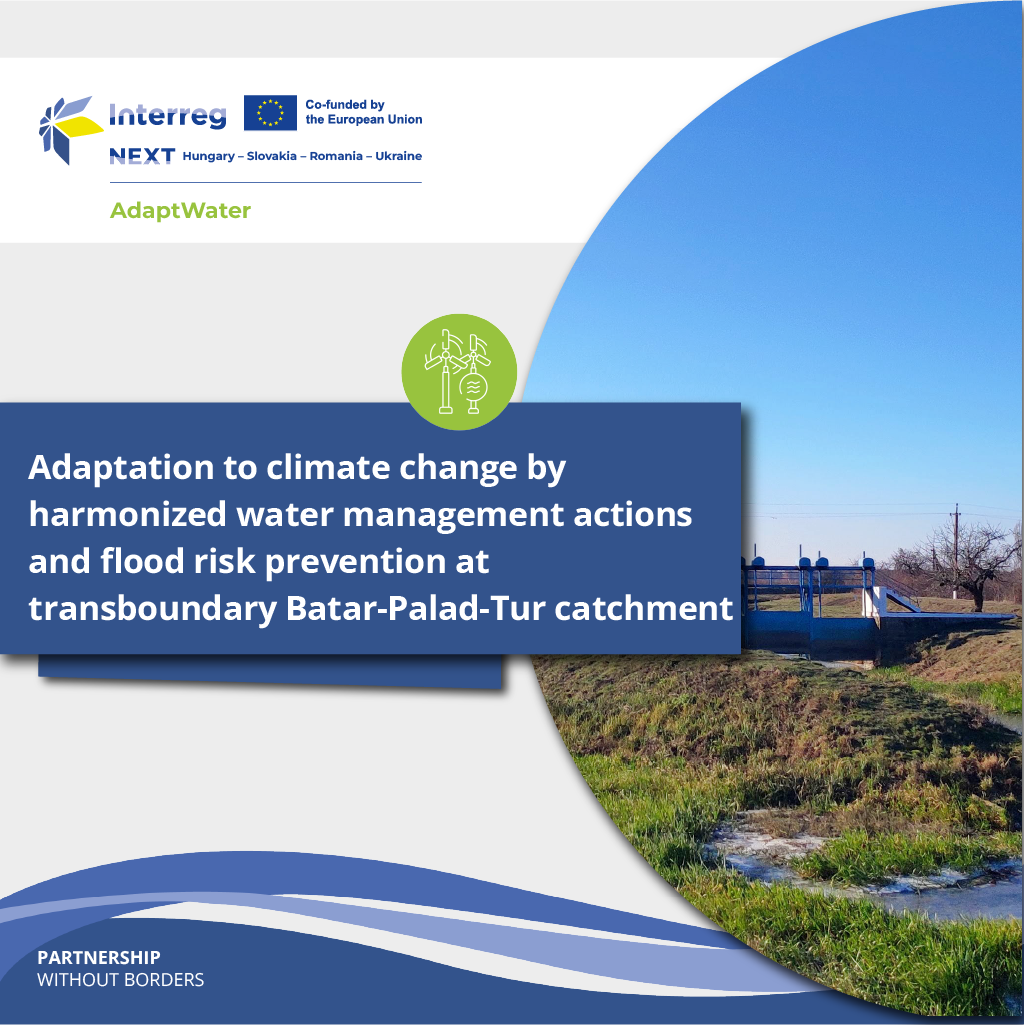
On March 6, 2025, the opening conference of the Ukrainian-Hungarian project “Adaptation to Climate Change by Harmonized Water Management Actions and Flood Risk Prevention at Transboundary Batar-Palad-Tur Catchment” (AdaptWater) took place in Vynohradiv, Ukraine. The project focuses on enhancing flood prevention and climate resilience in the border region through joint infrastructure improvements and modern monitoring systems.
During the event, key stakeholders emphasized the strategic importance of the initiative. Oleg Kysil, Head of the Tisa River Basin Water Resources Directorate and project coordinator, highlighted that AdaptWater marks a significant step forward in the continued modernization of the cross-border Batar water management system in cooperation with Hungarian water management experts.
The AdaptWater project includes key infrastructure improvements on both sides of the border to enhance flood prevention and climate resilience. In Ukraine, the project will focus on the reconstruction of the Staryi Batar Channel (5.5 km) near Nevetlenfalu – Dyula, the renovation of the distributive sluice-regulator on the Staryi Batar Channel, and the installation of an automated hydropost for water discharge measurement. Meanwhile, in Hungary, planned activities include the construction of culvert and sluice at the Alsó-ÖregTúr River, the building of a 3 km maintenance road on the right-bank dike of the Tur River, and the establishment of a water level monitoring station on the Palad River. These measures will contribute to more effective water management and disaster preparedness in the transboundary basin.
To enhance water management efficiency, automated hydrological stations will be integrated into the AIMS “Tysa” joint monitoring system. Additionally, project partners will acquire modern operational equipment to improve water resource management capabilities.
The project partners, including the Tisza River Basin Water Resources Directorate, Upper-Tisza Regional Water Directorate and the Vynohradiv Interrayon Department of Water Management, are committed to ensuring effective implementation. Discussions during preparatory meetings covered procurement procedures, financial planning, communication strategies, and administrative reporting requirements, ensuring compliance with programme and national regulations.
A series of communication activities and public engagement initiatives will follow, inviting local communities and stakeholders to participate.
For more information, visit AdaptWater Project Website.