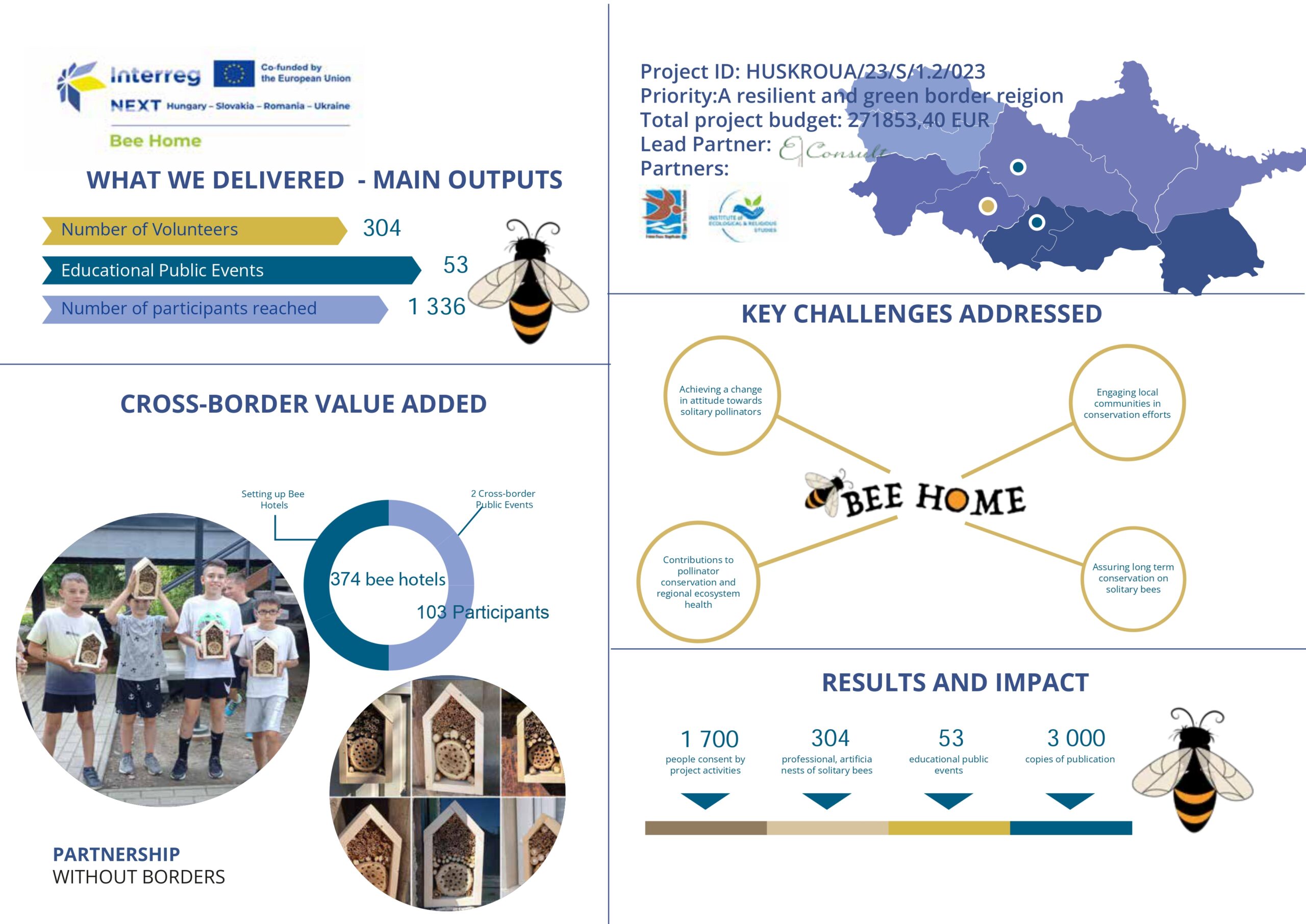
The project “Bee Home” addresses the critical decline in pollinator populations by promoting the active conservation of wild, solitary bees through community engagement, education, and sustainable practices. Insects, particularly pollinators, are essential to biodiversity and food security, yet their numbers have declined significantly due to industrial agriculture, habitat loss, and climate change.
To counter this trend, the project will establish 300 professionally installed bee hotels and involve over 900 citizen scientists and 1,200 community members in pollinator conservation efforts. These bee hotels serve as nesting and breeding sites for wild bees, enhancing habitat connectivity and supporting ecosystem resilience.
The project combines scientific and educational methods, including the development of short documentaries, an educational tabletop game, online platforms, cross-border public events, and creative competitions for children. These activities aim to raise awareness and foster long-term commitment to pollinator protection.
Beneficiaries include local communities, farmers, schools, NGOs, and public institutions, all of whom will benefit from strengthened ecosystem services and improved biodiversity. Through its innovative and participatory approach, the “Bee Home” project seeks to create lasting impact in the field of environmental conservation.