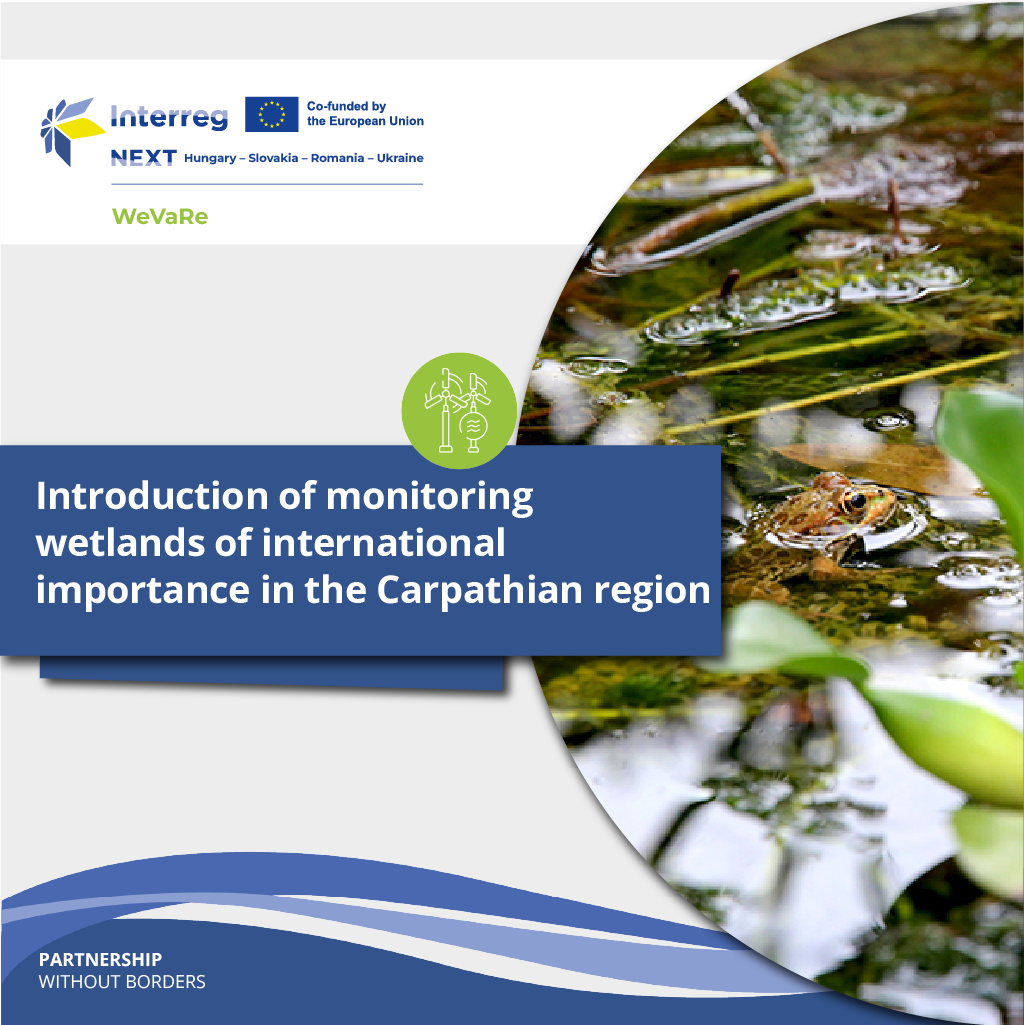
On 24 July 2025, the WeVaRe project held its kick-off conference at the Information Center of Uzhhorod National University. The event presented the project’s main objectives, the implementation plans of each partner, and the strategy to engage stakeholders in monitoring wetlands across the Zakarpattia region. Local organisations, institutions, and environmental experts joined the meeting to align activities and coordinate efforts in reaching the project’s indicators.
First results
During the initial implementation period, the project team began to assess the state of wetlands in the cross-border area of Romania, Ukraine, and Slovakia. A documentary database was created, compiling satellite imagery, historical maps, and graphic records from the past decade to analyse the evolution of wetlands.
Two wetland areas of particular importance – Dese Turți–Iezerul Mare and Moisei–Taul lui Ciumau – were identified as pilot monitoring sites. Fieldwork and topo-geodetic surveys have already started, including seasonal monitoring cycles, soil and water sampling, and the identification of pollution sources and anthropogenic pressures. At the same time, partners from Administration of Maramures Mountains Nature Park successfully carried out species mapping in both pilot sites.
Dese Turți–Iezerul Mare in northern Romania is a nationally protected natural area, known for its specific wetland biodiversity and rare habitats. The oligotrophic peat ecosystem is a highly fragile environment, home to glacial relict species preserved by the area’s unique microclimate. It also holds scientific importance in ecology, climatology, and paleo botany due to the study of its peat layers. As part of WeVaRe, the Technical University of Cluj-Napoca team is conducting four monitoring cycles here using geospatial technologies. The data collected will feed into a GIS database, supporting comprehensive assessments of the site’s condition and long-term changes.
Through these activities, the project has determined the most suitable geospatial monitoring technologies for the target areas. Close cooperation with local authorities, companies, and NGOs ensures that stakeholders remain actively involved, with consultations and information-sharing planned throughout the project’s lifetime.
About the project
The WeVaRe project (HUSKROUA/23/RS/1.2/036) aims to develop an integrated wetland monitoring and risk assessment system using modern technologies and innovative practices. By combining expertise from multiple scientific disciplines, WeVaRe contributes to a better understanding of wetland degradation processes and provides a model that can be replicated in other regions.
Why it matters
By integrating advanced monitoring and analysis techniques and by encouraging cross-border scientific cooperation, WeVaRe is laying the foundations for long-term wetland preservation in the Carpathian border region. The project not only improves knowledge but also develops tools and best practices that can be transferred across Europe and beyond.
More about the project on our website: https://next.huskroua-cbc.eu/project-map/state-university-uzhhorod-national-university-2/